Keeping Your Books Straight: Why a Tradie Work Pipeline Dashboard is a Must-Have
Track every building job from quote to payment with a tradie work pipeline dashboard. See your cash flow, pinpoint delays, and boost profitability for your Australian trade business.
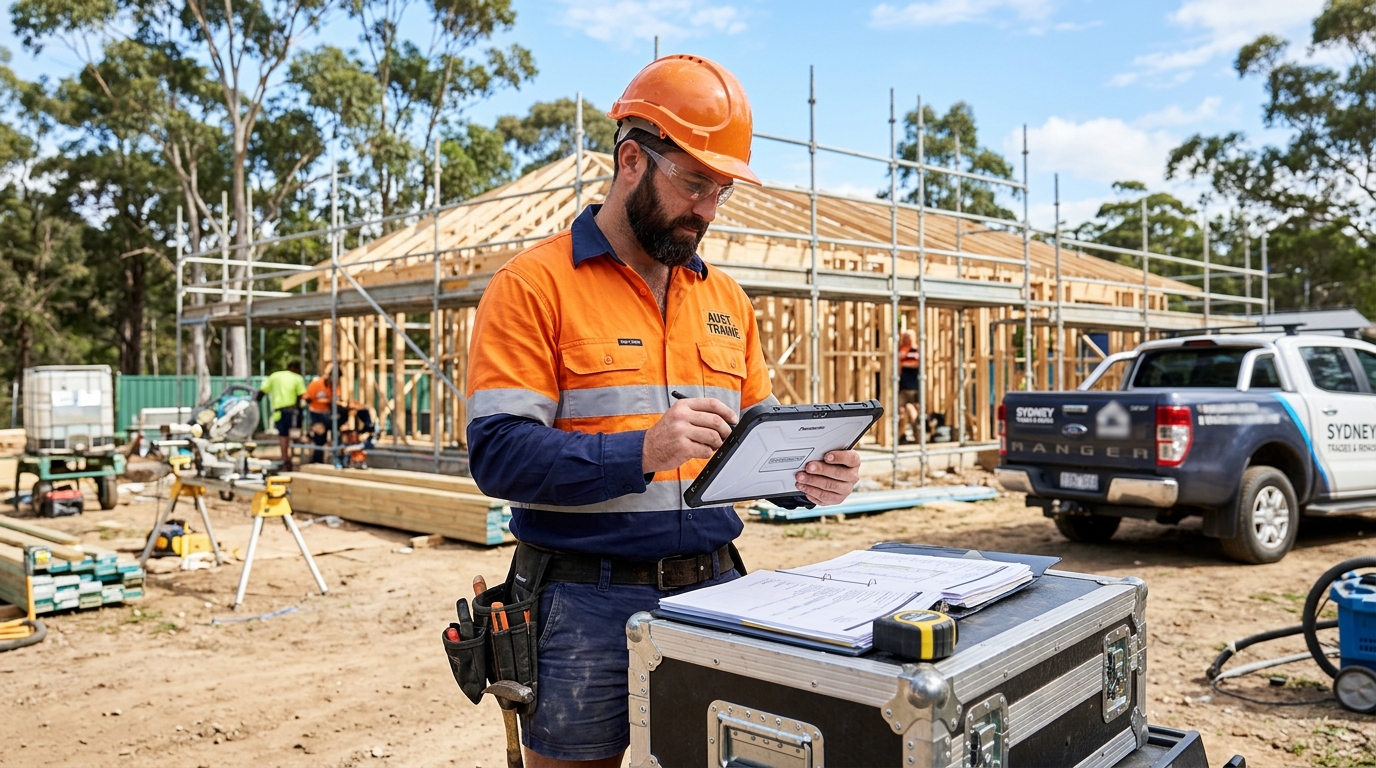
Quick answer
A tradie work pipeline dashboard replaces the whiteboard with a live view of every job moving through stages like quoted, accepted, scheduled and paid, so you spot bottlenecks before they cost you. Every day saved on a build can be worth $800 to $2,500 in combined labour, hire and opportunity cost. Start with 3-5 core stages and update it daily.
The Builder's Edge: Mastering Your Tradie Work Pipeline Dashboard
As a builder running your own crew, you know keeping jobs moving and cash flowing is non-negotiable. It’s too easy for projects to hit snags, for payments to drag on, or for you to spend valuable hours chasing invoices when you should be on site or lining up the next big build. This common problem often comes down to not having a clear, immediate view of where every single job stands. From the moment you first get the call to the final handover and payment, jobs can get lost in the shuffle. A well-implemented tradie work pipeline dashboard is the digital tool that fixes this. It provides a real-time, bird's-eye view of your entire operation, allowing you to quickly spot potential delays, manage your labour and materials more effectively, and ensure your cash flow remains healthy. This guide will walk you through how to set up and use a dashboard to keep your building business efficient, organised, and profitable in the competitive Australian market.
What Exactly is a Work Pipeline Dashboard for Tradies?
A tradie work pipeline dashboard, for a tradie, is essentially a dynamic visual map of all the jobs your building business has in motion. Imagine replacing that messy whiteboard in the workshop with a digital version that updates itself and is accessible from anywhere. Each job progresses through defined stages – typically from 'quoted' to 'accepted', 'scheduled', 'in progress', 'pending invoice', and finally 'paid'. Instead of sifting through paper files, scrolling endless emails, or checking fragmented spreadsheets, you get the full picture of your workload and commitments instantly. This clarity allows you to swiftly identify any bottlenecks, such as a large build stuck waiting on council approval, or to pinpoint which of your skilled carpenters is next available for a smaller renovation. For any busy builder juggling multiple projects, this centralised overview is a game-changer, saving valuable time and preventing costly jobs from ever falling through the cracks. It provides a structured way to manage the flow of work, ensuring no client is left waiting and no deadline is missed without good reason.
Essential Features for a Builder's Dashboard
To be truly effective for a builder, a tradie work pipeline dashboard must offer more than just a simple job list. Essential features include robust task management capabilities, allowing you to assign specific duties to individual team members or sub-contractors, complete with clear due dates for each project stage. The ability to attach all critical documents – from architectural plans and engineering reports to client communication logs and supplier quotes – directly to each job entry is also crucial for quick reference. The most powerful dashboards integrate seamlessly with your existing quoting and invoicing software, automatically pulling in job data and financial figures. This integration drastically reduces manual data entry, cuts down on transcription errors that could cost your business hundreds on a large build, and ensures your records are always accurate. You should also be able to easily filter jobs by client, project type, current status, or even based on their projected profit margin. Some advanced systems even incorporate a dedicated tradie revenue dashboard function, offering real-time insights into anticipated income from accepted jobs versus actual money collected. This detailed financial foresight empowers you to forecast cash flow with greater precision and plan future investments in tools or staff with confidence, knowing exactly where your business stands financially.
How a Dashboard Speeds Up Your Building Workflow
Builders navigate a complex environment with numerous moving parts: managing multiple construction sites, coordinating various sub-contractors, orchestrating material deliveries, and securing timely client approvals. Without a central, visible system, these complexities often lead to inefficiencies and costly project slowdowns. A tradie business pipeline visualised on your tradie work pipeline dashboard provides real-time tracking of every component of a project. You can immediately see if the electrician has completed their rough-in, if the specialty tiles have arrived on site, or if a crucial progress payment from the client is due. This unparalleled visibility means you can address potential delays or issues before they escalate into major problems. For instance, if the dashboard shows the bricklaying crew is running behind schedule by two days, you can proactively adjust the carpenter's start date or quickly source additional labour to catch up. This kind of proactive management saves significant time, maintains strong client relationships, and crucially, prevents budget-blowing project overruns. Every single day saved on a building project can easily be worth anywhere from $800 to $2,500 in combined labour, equipment hire, and lost opportunity costs, depending on the project's scale.
The Real Benefits: Better Decisions, Better Books
Implementing a dedicated tradie work pipeline dashboard fundamentally changes how you manage and grow your building business. You shift from a reactive mode, constantly putting out fires, to a proactive approach where you anticipate and manage your workload with precision. This evolution directly leads to making smarter, more informed decisions every day. Thinking about taking on another large residential extension? A quick check of your dashboard reveals your current team's capacity and projected availability. Considering a significant investment in a new excavator or a fleet of new utes? The financial insights provided by your dashboard, particularly if it includes a tradie revenue dashboard, can clearly illustrate if you have the projected cash flow to comfortably support such an outlay. For example, knowing you have $25,000 in upcoming project payments due allows you to confidently purchase that new concrete saw without stressing about immediate cash flow. Furthermore, a detailed pipeline helps with evaluating your suppliers and sub-contractors. If you notice a specific plumbing supplier consistently causes delays or provides inaccurate estimates, your dashboard's historical data provides objective proof to address the issue directly or seek alternative providers. Ultimately, maintaining a clear and updated pipeline view significantly reduces operational stress, dramatically improves communication with clients, and lays the groundwork for a stronger, consistently more profitable Australian trade business that can scale effectively.
Linking Your Dashboard with Other Trade Tools
For your tradie work pipeline dashboard to reach its full potential, it needs to be an integral part of your wider business software ecosystem. The most effective dashboards offer seamless integration with your essential tools, particularly your quoting and invoicing app, such as QuoteMate. This means that all critical job data, client details, and financial figures are automatically synced across platforms. When a new quote is accepted and marked in QuoteMate, it can automatically trigger the creation of a new job entry within your dashboard's pipeline, setting the initial stage. Similarly, when a client pays an invoice processed through QuoteMate, the job status on the dashboard updates automatically to 'paid'. This crucial connection eliminates tedious manual data entry, drastically reduces the potential for costly errors, and frees up significant administrative time. Many savvy builders also connect their dashboards to popular accounting software like Xero or MYOB. This creates a powerful, end-to-end view of your entire financial landscape, from initial estimate to final profit margins, ensuring all your books are accurate and up-to-date with minimal manual effort on your part.
Keeping Your Australian Business Compliant and Agile
Operating as a tradie in Australia means adhering to a specific set of rules and regulations, ranging from strict GST reporting requirements to various industry-specific standards. A well-managed tradie work pipeline dashboard is an invaluable asset in ensuring you stay on top of these obligations. For instance, by meticulously tracking job stages, you can ensure that all progress payments are invoiced correctly, align with contractual milestones, and comply with the Australian Taxation Office (ATO) guidelines for business record-keeping. You can also securely attach relevant Australian Standards documents, such as AS/NZS 3000 for electrical installations or AS 3740 for waterproofing wet areas, directly to specific jobs within the dashboard. This makes compliance checks straightforward and accessible for both you and your team. This level of organisation is not just about efficiency; it's about mitigating risk. A simple oversight in record-keeping or non-compliance could lead to significant fines or legal issues for your business. For comprehensive guidance on digital record-keeping best practices, the Australian Taxation Office provides detailed information, which can be found at www.ato.gov.au/business/record-keeping.
Avoiding Common Dashboard Mistakes and Maximising Your ROI
The most significant pitfall tradies encounter with a new tradie work pipeline dashboard is a lack of consistent use. It's not a 'set and forget' tool; its value comes from constant, diligent updating. Make it a routine: ensure every new lead, every accepted quote, and every completed job stage gets accurately logged. Secondly, resist the urge to overcomplicate it from day one. Start with a simplified set of 3-5 core stages for your typical jobs and gradually add more detail as you and your team become comfortable with the system. Thirdly, encourage and train your entire team to use it. If your subbies or apprentices aren't regularly marking off their completed tasks, the dashboard won't provide an accurate reflection of your overall trade business KPI performance. Regularly review your pipeline – daily or at least weekly checks are crucial to catch potential issues early, manage workloads effectively, and ensure your entire building operation keeps ticking over smoothly. A diligently maintained dashboard isn't just a tracking tool; it's your best mate for staying organised, making informed decisions, and ultimately boosting your profitability.
Pro Tips
- Start simple: Map out 3-5 key stages for your average job.
- Update daily: Spend 10 minutes each morning reviewing and moving jobs.
- Link to your quoting software: Save time on data entry for new jobs.
- Use it to forecast: Look ahead at scheduled work to plan materials and labour.
- Spot bottlenecks: See which jobs are stuck and why, then fix it.
- Delegate updates: Get your team to mark off completed tasks.
- Keep it clean: Archive or delete old jobs to maintain clarity.
Quote This Job in Under 2 Minutes
Skip the spreadsheet. QuoteMate’s AI pulls real-time supplier prices and generates a professional PDF quote you can send on the spot.
Or try it on the web →Related Trade
More Guides
- How to Quote a Fence Installation in Australia
- How to Quote Painting a House in Australia
- How to Quote a Pergola Build in Australia
- How to Quote Electrical Work in Australia
- How to Quote Plumbing Work in Australia
- How to Quote a Retaining Wall in Australia
- How to Quote a Roof Restoration in Australia
- How to Quote a Landscaping Job in Australia